
Overview
This project explores how digital platforms can enable circular economy practices in the textile industry by addressing a core systemic issue: lack of transparency and collaboration between manufacturing actors.
The outcome is a product concept and prototype for a platform that facilitates industrial symbiosis, allowing textile manufacturers, certifiers, and institutions to exchange sustainability-related data in a trusted and structured way.
Based on my thesis: Circularity and Technology in Textile Manufacturing: a Blockchain application
Problem Space
The textile industry is one of the most environmentally impactful industries globally, with:
- High water consumption and pollution
- Significant chemical waste
- Fragmented supply chains with limited data visibility
Despite growing pressure from regulators and consumers, companies struggle to adopt circular practices due to:
- Lack of shared data across stakeholders
- Limited trust between competing firms
- Absence of standardized sustainability metrics
As highlighted in the research, collaboration between firms within textile districts is critical, yet currently under-enabled by digital tools.
Product Vision
Enable textile ecosystems to operate as connected, circular networks rather than isolated actors.
The product aims to:
- Transform waste into a shared resource
- Enable data-driven sustainability decisions
- Create trust between independent companies
- Support regulatory compliance and certification
User & Stakeholder Mapping
Through research and system analysis, I identified three primary user groups:
| Stakeholder | Needs |
|---|---|
| Textile Manufacturers | Need to track production impact, want to reduce waste and costs, and require access to reusable materials. |
| Certifiers & Institutions | Need reliable, auditable sustainability data and monitor environmental compliance. |
| Municipalities / Ecosystem Coordinators | Aim to optimize district-level sustainability and facilitate collaboration between firms. |
Key Insight
The main opportunity lies not in optimizing a single company, but in:
Designing a system where waste and data flow across companies as shared assets.
This aligns with the concept of industrial symbiosis, where companies collaborate to optimize resource usage collectively.
Solution Concept
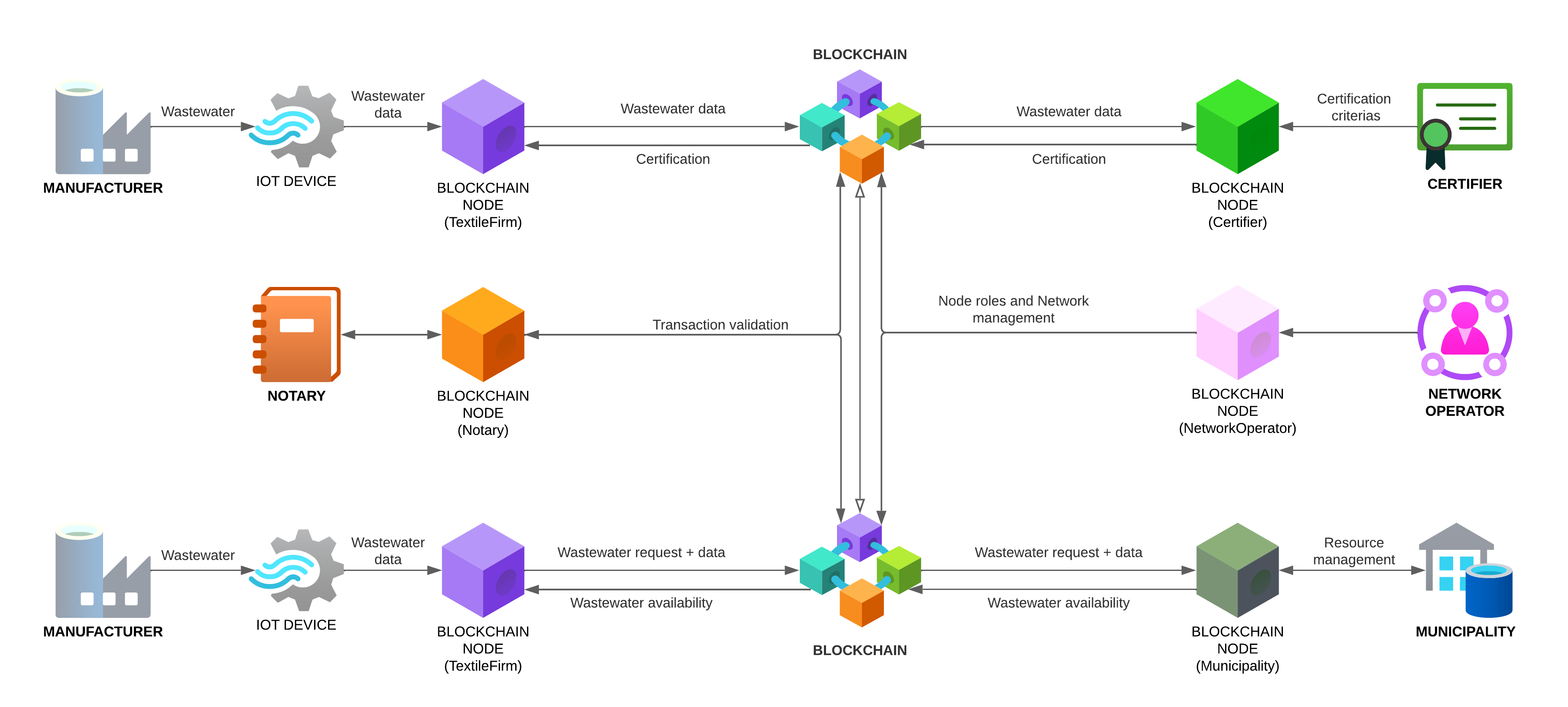
I designed a platform ecosystem that enables:
- Data Sharing Layer Standardized environmental data (waste, chemicals, water usage) and real-time input from production processes (via IoT assumption)
- Transparency & Trust Layer Shared ledger concept to ensure data integrity, controlled visibility, and trust between actors
- Collaboration Layer Discovery of reusable waste/materials and matching supply (waste) with demand (reuse)
Product Design Approach
1. Problem Framing
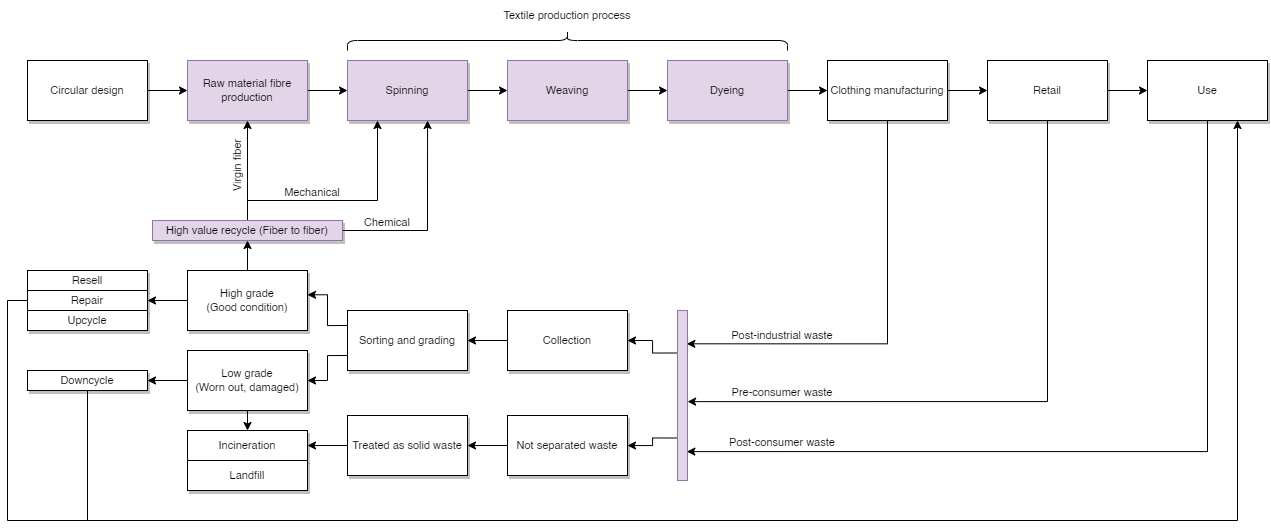
- Mapped the textile production lifecycle
- Identified highest environmental impact points (e.g. dyeing, wastewater)
- Focused on waste management + data transparency
2. System Thinking
Rather than designing a single feature, I approached this as:
- A multi-sided platform
- Operating within a regional industrial ecosystem
- Balancing business incentives, data sensitivity, and collaboration dynamics
3. Value Proposition Design
| Stakeholder | Value Delivered |
|---|---|
| Manufacturers | Reduce waste costs, access reusable materials |
| Certifiers | Reliable, standardized data |
| Municipalities | Improved environmental monitoring |
| Ecosystem | Increased circularity and efficiency |
Core Features
- Waste & Resource Registry Companies log waste outputs (materials, chemicals, water data) structured and standardized for comparability
- Data Visibility Controls Companies control what data is shared and with whom, enabling collaboration without compromising sensitive information
- Smart Matching System Identifies opportunities where one company’s waste becomes another’s input
- Certification Integration Certifiers access verified data directly, reducing manual auditing processes
Why This Matters
This project demonstrates how digital products can turn sustainability into a business advantage, enable new collaborative business models, and reduce friction in multi-stakeholder ecosystems.
It shifts sustainability from a compliance burden to a network-driven value creation system.
Challenges & Trade-offs
From a product perspective, key challenges included:
- Adoption barrier: convincing competitors to share data
- Data standardization across different companies
- Balancing transparency vs privacy
- Integration with existing systems (ERP, IoT, etc.)
These are critical considerations for any real-world product rollout.
Outcome
- Designed a complete product concept and system architecture
- Validated feasibility through a working prototype (conceptual implementation)
-
Identified future opportunities:
- Integration with supply chain platforms
- Expansion into fashion retail transparency
- ESG reporting automation
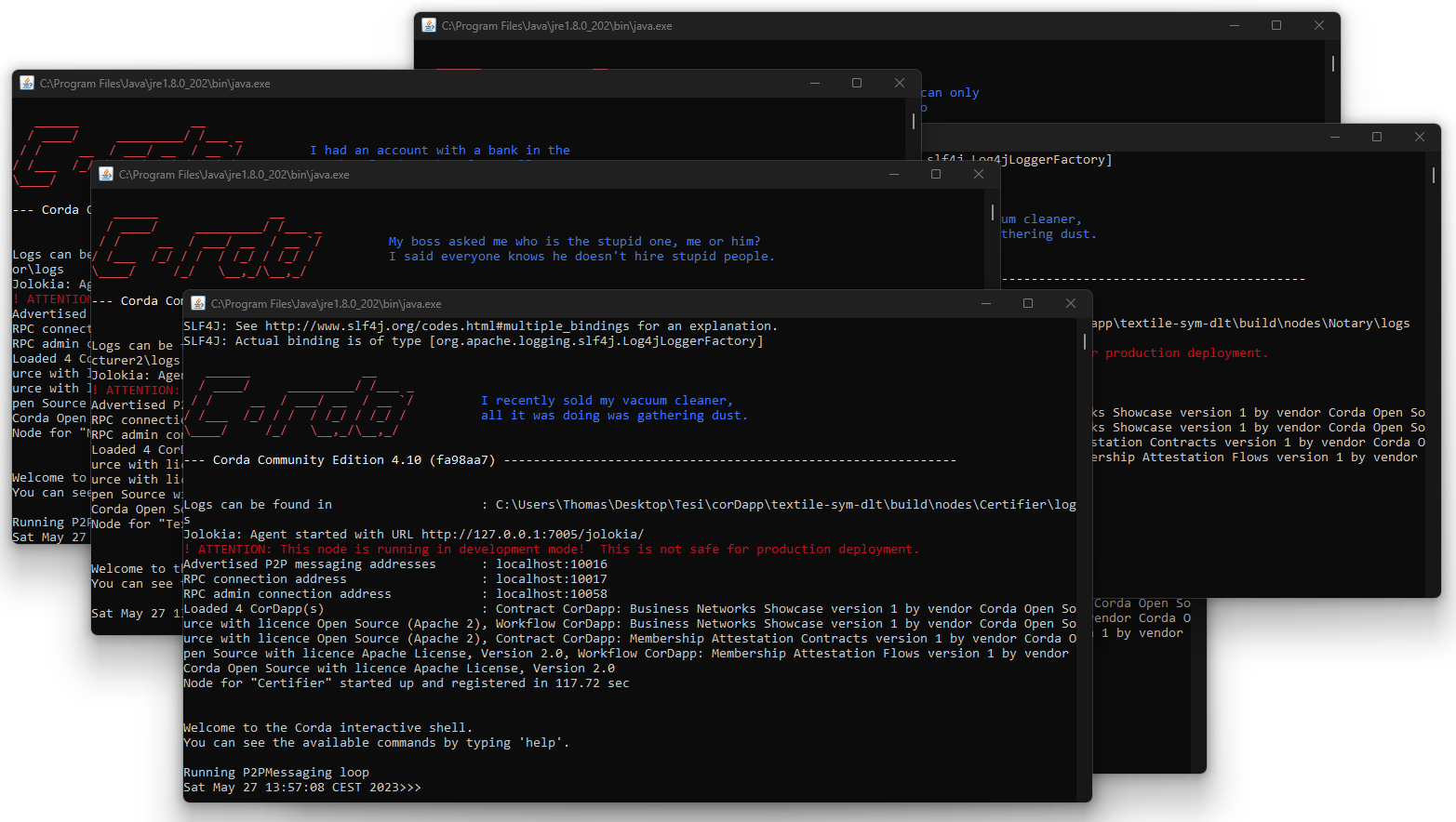
Source code: github.com/tgolfetto/textile-sym-dlt/